

You love a gold tone or a bright white shine, so you chose a silver piece plated with gold or rhodium. Now the question is: how do I make the plating last longer? Plating is a beautiful thin layer, and how long it lasts depends a lot on how you wear, clean and store the piece. This guide explains what plating is, what makes it wear quickly, and a simple care routine that protects its color.
In short: Plating wears with friction and chemicals. Clean plated pieces with warm water, mild soap and a soft cloth only, keep them away from perfume, chlorine and abrasives, and store each piece separately. If the plating wears thin over the years, a specialist jeweler can re-plate it.
◆ What does gold- or rhodium-plated silver mean?
The piece has a base of 925 sterling silver, with a very thin layer of another metal added on top by electroplating. That layer gives the piece a different color or shine, while the silver underneath remains a precious metal.
- Gold plating: gives a warm gold tone while keeping the price close to that of silver.
- Rhodium plating: rhodium is a bright white metal from the platinum family. It gives a strong white shine and slows silver tarnish.
This is completely different from ordinary "plated" fashion jewelry, which has a cheap base metal. You can read the difference in detail in our articles about 925 silver and plated jewelry on the AZIN blog.
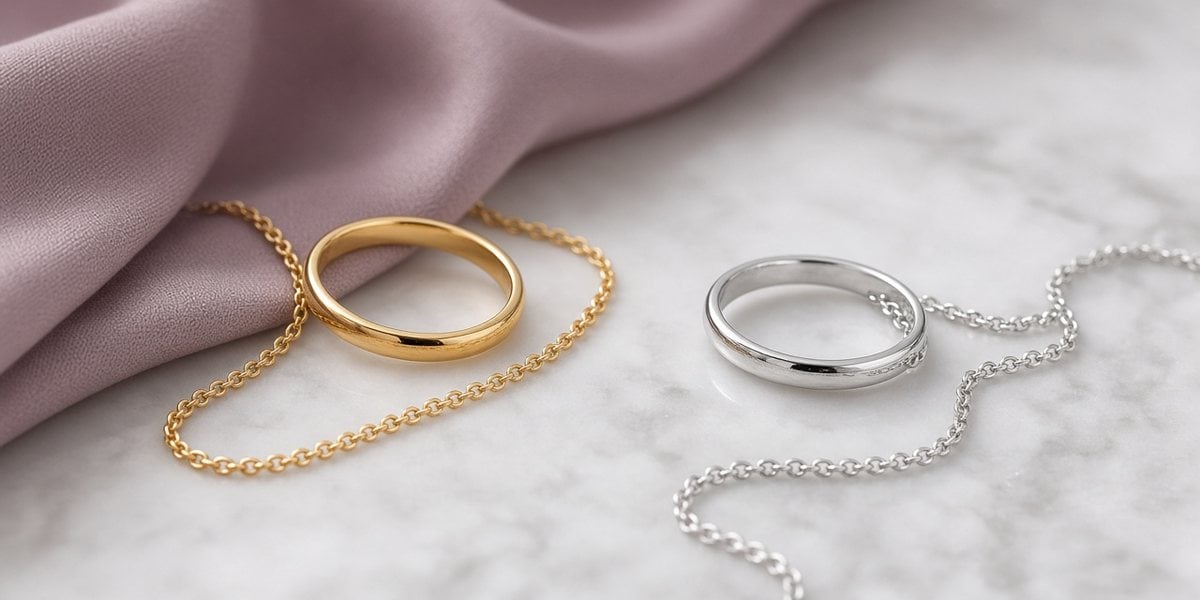
◆ Gold plating vs rhodium plating
| Gold plating | Rhodium plating | |
|---|---|---|
| Color | Warm gold | Bright, strong white |
| Hardness | Relatively softer | Very hard and scratch-resistant |
| Over time | May wear thin and show the silver underneath | May wear thin and show the warmer silver tone underneath |
| Tarnish | Protects the surface while it lasts | Noticeably slows tarnish |
| Best for | Anyone who loves gold | Anyone who loves a strong white shine |
◆ How long does plating last?
There is no fixed number, because the life of plating depends on its thickness and how the piece is worn and cared for. The general rule is that pieces with more friction wear faster:
- Rings and bracelets: the fastest, because they rub against surfaces and meet water and soap.
- Necklaces: in between, especially at the clasp and the back of the neck.
- Earrings and pendants: the slowest, because they see little friction.
The first signs of wear usually appear inside a ring, on the edges and around the clasp, as a lighter or warmer color than the rest of the piece.
◆ What makes plating wear off quickly?
- Friction: with desks, bags, hands and other pieces.
- Perfume, lotions and hairspray: chemicals eat away at the thin layer over time.
- Chlorine and sea water: among the strongest causes.
- Sweat: especially during exercise and in summer.
- Abrasives: toothpaste, baking soda and hard brushes.
- Treated polishing cloths: designed to remove a layer from the surface, so they thin plating with repeated use.
- Strong dip cleaners: chemical liquids made for plain silver can damage plating.
◆ A daily care routine
- Put the piece on a minute or two after perfume and lotion.
- Take it off before showering, exercise, swimming and housework.
- After wearing, wipe it with a soft, dry cotton cloth, without rubbing.
- Put it straight back in its pouch or box.
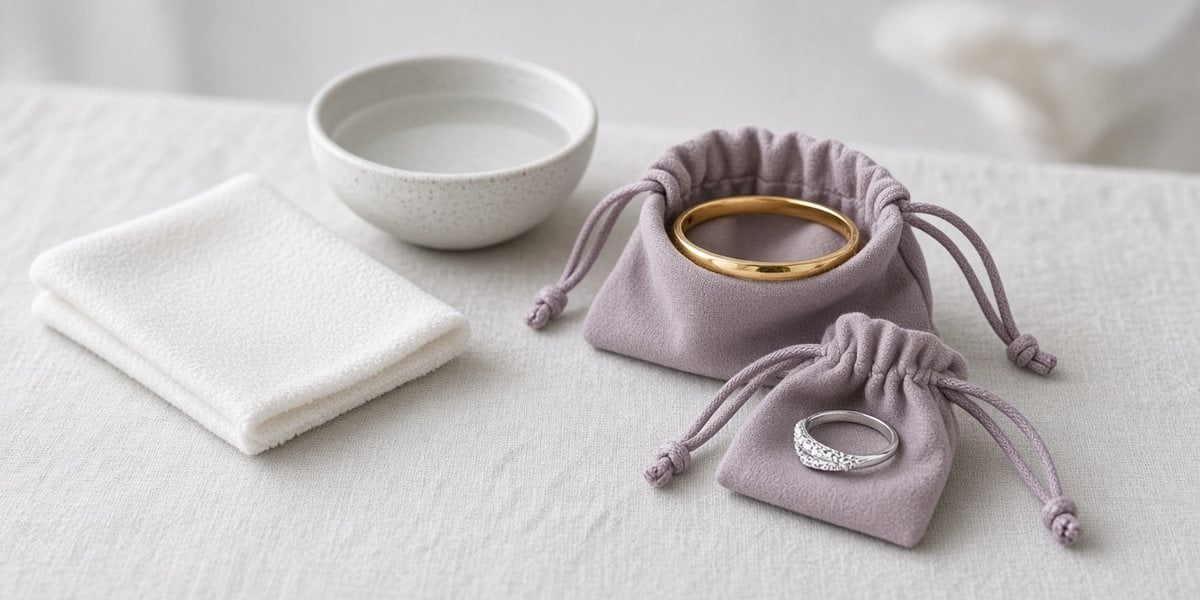
◆ Safe cleaning, step by step
- Fill a bowl with warm (not hot) water and a drop of mild soap.
- Dip the piece for one or two minutes only.
- Wipe it with your fingers or a very soft cloth, and use a very soft brush gently around any stones.
- Rinse it in clean water.
- Pat it dry with a soft cotton cloth, without rubbing.
Note: Do not use baking soda, the aluminum foil method, treated polishing cloths or toothpaste on plated pieces. Those methods are for plain silver only.
For the difference between cleaning plain and plated silver, see our article on how to clean silver at home.
◆ Proper storage
- Store each plated piece in its own soft fabric pouch or sealed bag.
- Do not mix them with pieces set with hard stones that can scratch them.
- Keep them away from humidity and the bathroom.
- Do not hang them where they rub against other pieces.
◆ The plating has worn thin. What now?
Do not worry: underneath the plating is genuine 925 silver. You have two options:
- Re-plating: specialist jewelry shops can re-plate a piece with gold or rhodium so it looks new again.
- Wearing it as it is: some people love the natural silver tone that shows through over time. In that case, treat it like ordinary silver, bearing in mind it may start to dull like plain silver.
AZIN tip: If the plating has worn in only a few spots, do not try to polish hard to even it out, because you will remove the remaining plating. Full re-plating is the better option.
◆ Can plating cause allergies?
Usually not, especially if the silver underneath is 925. But some platings have a nickel-containing layer underneath, so if you have a severe allergy, ask before buying. More details in our article does silver cause allergies?.
◆ Plated silver FAQs
Is gold-plated silver real silver?
Yes, if its base is 925 silver. The plating is a layer of color on top, and the silver underneath remains a precious metal.
Does rhodium plating wear off?
It wears gradually with friction and time, especially on rings and bracelets, and a specialist jeweler can re-apply it.
Can I use a silver polishing cloth on plated pieces?
A plain, soft, dry cloth, yes. Avoid treated polishing cloths, as they thin the plating.
Can I shower wearing a plated piece?
Preferably not, because soap, shampoo and hot water speed up wear on the plating.
Why has my plated ring changed color on the inside?
Because the inside rubs against your finger constantly and meets soap and sweat, so the plating wears there first.
Read also:
◆ Silver vs White Gold vs Stainless Steel: Which One Suits You?
◆ 925 Silver Care Guide: Cleaning, Storage and Preventing Tarnish
◆ Does 925 Silver Change Color? What Causes Tarnish and How to Prevent It
A gold or white touch that lasts
925 sterling silver jewelry plated with gold and rhodium, with the right care tools.