
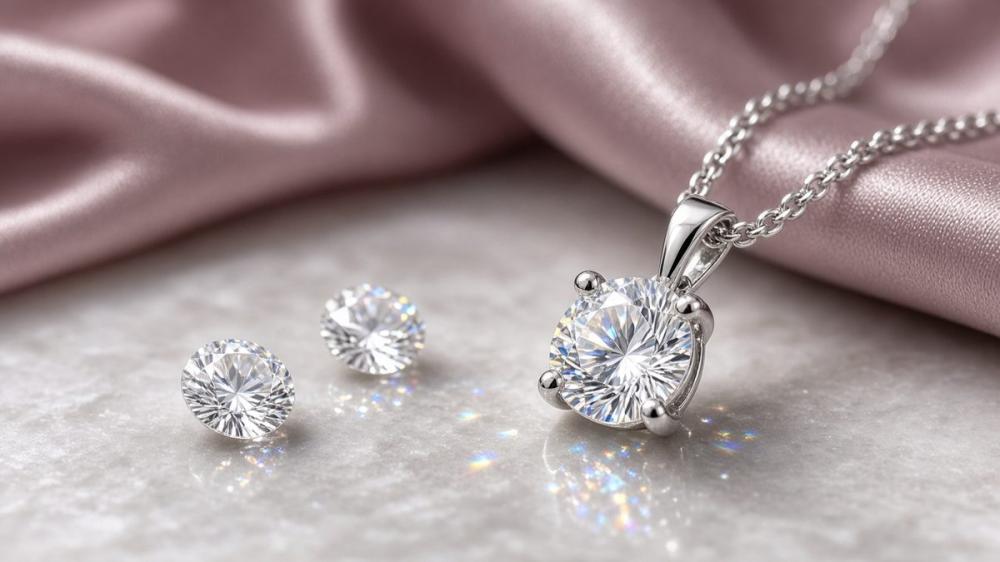
Its sparkle catches the eye from across the room, and many people mistake it for a diamond. This is moissanite, one of the most popular jewelry stones of recent years. But what exactly is it? Is it a diamond? And is it worth it? This guide answers with accurate information and compares it with diamond and zircon.
In short: Moissanite is a silicon carbide stone, not a diamond. The moissanite used in jewelry today is lab-grown. It is extremely hard, has more brilliance than diamond with more flashes of color, and costs far less.
◆ What is moissanite?
Moissanite is a mineral made of silicon carbide. It was discovered in 1893 by the French scientist Henri Moissan in fragments of a meteorite that fell in Arizona, USA. At first he believed the crystals he found were diamonds. Years of study later, he realized they were a different material, and the stone was named after him.
Natural moissanite is extremely rare, and its crystals are too small to be used in jewelry. That is why all moissanite in jewelry today is created in a lab, matching natural moissanite in chemical composition and properties.
A common myth: Moissanite is not a "black stone". Its best-known color in jewelry is clear and colorless, and it is also made in other colors.
◆ Is moissanite a diamond?
No. Diamond is made of carbon alone, while moissanite is made of silicon and carbon. They are two different stones, but they are close in look and hardness, which is why moissanite is considered one of the closest alternatives to diamond.
Selling moissanite as diamond is fraud. Sold under its real name, though, it is a beautiful and transparent choice for anyone who wants strong sparkle at a sensible price.
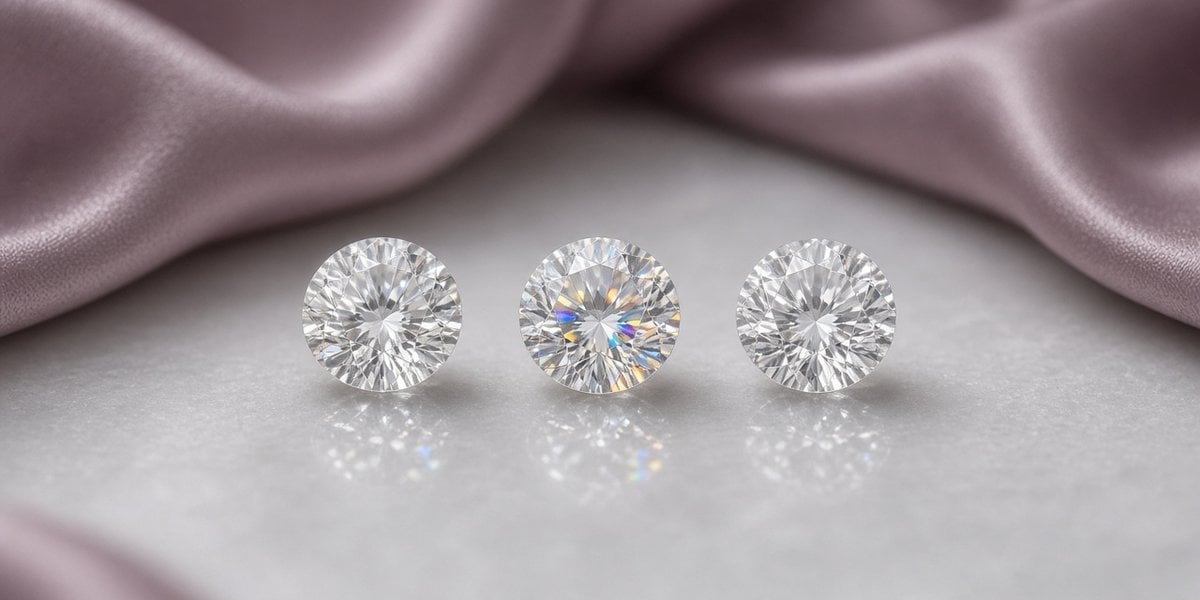
◆ Moissanite vs diamond vs zircon
| Property | Moissanite | Diamond | Zircon (cubic zirconia) |
|---|---|---|---|
| Composition | Silicon carbide | Carbon | Zirconium oxide |
| Mohs hardness | 9.25 | 10 | 8 to 8.5 |
| Brilliance | Very strong | Strong | Good |
| Flashes of color (fire) | Many and vivid | Moderate | Moderate |
| Source in jewelry | Lab-grown | Natural or lab-grown | Lab-made |
| Price | Mid-range | High | Budget-friendly |
What hardness means: the higher the number, the more scratch-resistant the stone. At 9.25, moissanite is one of the hardest stones used in jewelry after diamond, which makes it suitable for everyday wear.
◆ Why is moissanite's sparkle so special?
Moissanite bends light more than diamond does and splits it into colors far more strongly. The result is clear rainbow flashes, especially in sunlight or bright lighting.
Some people love these flashes for their liveliness and strong shine, while others prefer the calmer white sparkle of diamond. It comes down to taste, and there is no right or wrong choice.
◆ How do experts tell moissanite from diamond?
To the naked eye, most people find it hard to tell them apart, especially in small sizes. Experts rely on signs and tools:
- Double refraction: under a loupe, the facet edges in moissanite can appear doubled. This does not happen in diamond.
- Flashes of color: more visible in moissanite.
- Testing devices: basic thermal diamond testers may read moissanite as diamond, so specialists use devices that measure electrical conductivity or dedicated moissanite testers.
◆ Moissanite sizes and cuts
Moissanite is about 10% lighter than diamond at the same size because it is less dense. So its size is usually described in millimeters, or as "diamond carat equivalent", rather than by its actual carat weight. If you see "1 carat moissanite", it usually means a stone the size of a one-carat diamond.
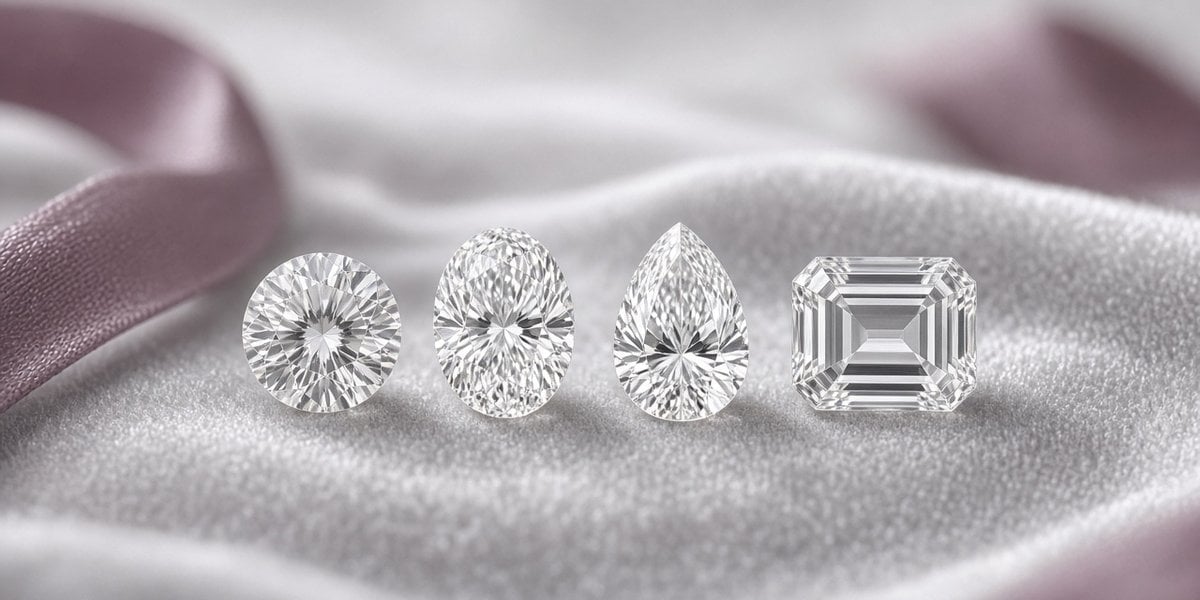
Moissanite is cut in the same popular shapes as diamond:
- Round: the most popular, with the highest sparkle.
- Oval: elongates the finger and looks larger than its size.
- Pear (teardrop): soft and distinctive in pendants and earrings.
- Rectangle and emerald: elegant and understated, with fewer flashes.
◆ Moissanite color and clarity
Most moissanite today is colorless or near-colorless. Some older or lower-quality stones had a slight yellow or green tint visible in certain lighting, but production has improved a great deal. Because it is lab-grown, its clarity is usually high, with no inclusions visible to the eye.
◆ Is moissanite a good choice for an engagement ring?
Its high hardness makes it suitable for a ring you wear every day for years, its sparkle draws attention, and its price allows for a larger stone. That is why many people choose it for engagement rings and bands. Just choose a secure setting and look after the piece. Browse AZIN silver rings.
◆ Is moissanite right for you?
A quick comparison to help you decide:
- It suits you if: you want strong sparkle, a piece that handles everyday wear, and a price far below diamond.
- It is not for you if: you are looking for an investment, or a piece you can later resell close to what you paid, because that is not moissanite's role.
◆ Moissanite set in 925 sterling silver
Moissanite and 925 silver make a beautiful pairing: strong sparkle on a precious metal at a sensible price. At AZIN you will find moissanite earrings and moissanite pendants set in 925 sterling silver.
Moissanite earringsMoissanite pendants
◆ How to care for moissanite pieces
- Clean them with warm water, mild soap and a soft brush, especially at the back where lotion builds up and dulls the sparkle.
- Dry the silver part well after washing.
- Store them separately, because hard moissanite can scratch other pieces.
- For the silver itself, see our polishing tools.
◆ How to buy moissanite with confidence
- A clear stone name: make sure the description says moissanite, not "diamond" or "diamond-like" without explanation.
- The metal: know what metal it is set in, such as 925 silver or plated silver.
- The size: ask for the stone diameter in millimeters if it is not listed.
- Store policy: read the exchange and return policy before ordering.
◆ Moissanite FAQs
Is moissanite natural or synthetic?
It does occur in nature but is extremely rare. The moissanite used in jewelry today is lab-grown.
Does moissanite change color or lose its sparkle?
The stone itself is stable and does not lose its brilliance. Dirt and lotion can dull it temporarily, and cleaning brings it back.
Is moissanite the same as lab-grown diamond?
No. Lab-grown diamond is carbon, exactly like natural diamond, while moissanite is a different stone made of silicon carbide.
Is moissanite expensive?
It costs more than zircon but far less than a diamond of the same size.
What is the difference between moissanite and zircon?
Moissanite is harder, more brilliant and keeps its shine longer. Zircon is cheaper and less hard, so it may show signs of wear over time.
Read also:
◆ Engagement Gift for the Bride: Choosing a Silver Set for the Shabka and Milka
◆ Earring Types and Which Ones Suit Your Face Shape
◆ Silver vs White Gold vs Stainless Steel: Which One Suits You?
Moissanite sparkle on 925 silver
Delicate pieces that shine every day and on every occasion.